
Your Local Septic Tank Company in Altamonte Springs, FL
We provide septic tank service in Altamonte Springs. We serve homes and businesses off SR 436, I-4 and Maitland Avenue. We pump and clean tanks, fix broken parts and build new drain fields. We also handle the Seminole County permit work. Most calls get a visit the same day or the next morning.
Who Handles Septic Work in Altamonte Springs?
We do. Our crews serve homes on older septic lots as well as shops and offices near Uptown Altamonte. The most common jobs here are routine pump outs, deeper tank cleanings, drain field work and pump repairs. Each one below links to a full page if you want more detail.
Septic Tank Pumping in Altamonte Springs
A pump out removes the sludge and scum that settle in your tank. Most homes here need one every 3 to 5 years. A family of four on a 1,000 gallon tank sits near the short end of that range. A couple living alone can often wait longer.
Can a tank go 20 years without pumping? Some do, but it is a gamble. Over time, solids rise to the outlet and slip into the drain field. That is how a simple pump out turns into a field replacement. We measure the sludge layer on every visit, so you get a real number, not a guess.
Septic Tank Cleaning in Altamonte Springs
Cleaning goes further than a pump out. The crew breaks up hardened sludge, rinses the walls and clears the outlet filter. Then we check the baffles and inlet pipe for cracks. Homes that skipped pumping for years usually need this deeper visit first.
Drain Field Installation in Altamonte Springs
A new field starts with a soil test on your lot. Florida wants dry soil between the bottom of the field and the wet season water table. Low lots near the Little Wekiva often fail that test. In that case, the field must be raised with clean fill. We file the permit and book the county inspection for you.
Repairs, Pumps and Inspections
We replace cracked lids, broken baffles and failed lift pumps. We also inspect systems for home sales. Many local buyers now ask for one before closing.
Related: Tank repairs, Inspections.
Before any of this, it helps to know whether your street has sewer at all.
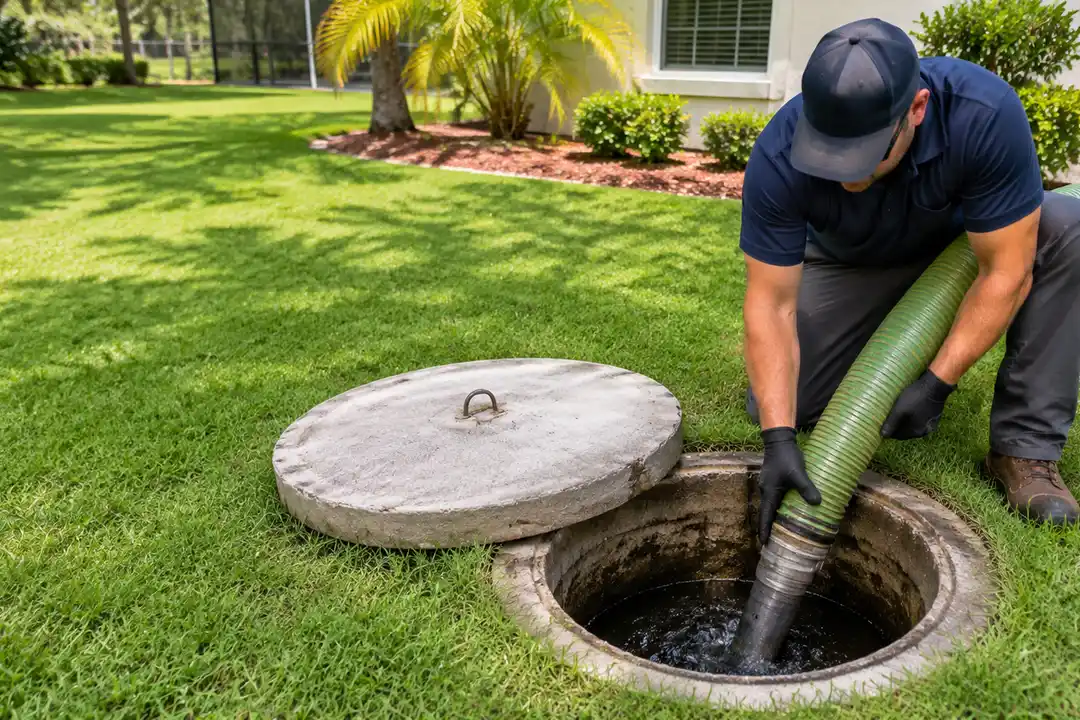
1200 × 800 · job photo in this city
Is Altamonte Springs on Septic or City Sewer?
Both. The City of Altamonte Springs runs its own sewer system, and most homes inside city limits use it. The city also sends sewer service to some homes just outside its borders. Older lots and unincorporated pockets nearby still rely on private tanks. Seminole County alone has about 26,000 tanks.
Seminole County Utilities covers some nearby areas through deals with the city and Sunshine Water Services. So two neighbors on the same road can have different setups. Your water bill is the quickest clue.
How Can You Tell if Your Home Is on Septic or Sewer?
Check your utility bill first. A sewer charge means you are connected. No sewer line on the bill usually means a tank. You can also look for a round or square lid in the yard. It often sits 10 to 20 feet from the house. Seller paperwork and old county permits help too.
If sewer reaches your street, Florida law gives you 365 days to connect after written notice. That window drops to 90 days when your system needs a repair or change. Before you pay for a big fix, ask the utility whether a sewer line is planned.
If you stay on septic, the next question is which rules apply.
What Septic Rules Apply in Altamonte Springs?
Septic permits for homes in the city come from the Florida Department of Health in Seminole County. Its office is at 400 W Airport Blvd in Sanford, and its phone is 407-665-3261. The rules themselves sit in Chapter 62-6 of the Florida code. FDEP has managed them since July 2021.
Part of Altamonte Springs sits inside the Wekiva springs priority focus area. State scientists mapped this zone because septic nitrogen seeps down into the springs. Seminole County counted about 3,850 tanks in it in late 2025. The county has a free address lookup that tells you if your lot is inside.
Inside the zone, the health office adds a $50 nitrogen review fee to new permits. The type of system you may install can change too.
Related: Aerobic systems.
What Does Florida’s 2023 Septic Law Change Here?
House Bill 1379 took effect July 1, 2023. New septic on lots of 1 acre or less in state cleanup areas must reduce nitrogen. That applies when sewer is not available. Seminole County says new systems on lots under 1 acre in its springs zones must meet this rule.
Rules are one side. Water is the other.
How Do the Little Wekiva River and Summer Rain Affect Your System?
A drain field needs dry soil to clean wastewater. When rain or a high river soaks the ground, water has nowhere to go. Toilets slow down, and wastewater can surface in the yard. The city sees this most in summer storms and after hurricanes.
Hurricane Ian showed how fast it happens. In September 2022, the Little Wekiva River rose to a level never seen in recorded history. Floodwater poured into Spring Oaks, and some homes there stayed flooded more than two weeks later.
The city also takes part in the Lake Jesup cleanup plan. It has 7 projects in that plan aimed at cutting nutrients in local water.
What should you do after a flood? Use less water for a few days. Do not pump while the yard is still soaked. Wet soil can push an empty tank out of the ground. Once the ground dries, book an inspection to check the field and the pump.
Flooding is only one warning sign.
What Signs Mean Your System Needs Help?
Watch for slow drains in more than one room and gurgling pipes. Sewage smells near the lid are another clue. So is a bright green, soggy patch over the field. A pump alarm that sounds is also a call to act. Backups after heavy rain are a classic sign of a tired field.
Catching one early usually means a pump out or a small repair. Waiting can mean a new field.
So what does each fix cost?
How Much Does Septic Service Cost in Altamonte Springs?
Price depends on the job, your tank size and how easy the lid is to reach. Buried lids, long hose runs and tight side yards add time. For permitted work, Seminole County sets its own fees. A new system permit costs $425, a repair permit costs $350 and a soil profile costs $125.
Springs zone lots add the $50 review fee, and a nitrogen reducing system costs more than a standard one. We give you a written price before any work starts.
Here is how a visit runs once you call.
What Happens When You Book a Visit?
- Call or book online. Tell us your address and what you see. We check the county records for your system and any past permits.
- We find and open the tank. The crew digs to the lid if needed and checks the sludge level.
- You get a written price. If the job needs a permit, we explain the fee and file it with the Sanford office.
- We finish and clean up. You get a service report with tank size, condition and the next due date.
Which Altamonte Springs Areas and Nearby Towns Do We Serve?
As your septic tank company in Altamonte Springs, we cover the whole city and the lots around it. That includes homes near Cranes Roost Park and Uptown. It also covers streets around the mall and the neighborhoods by Lake Orienta. We also serve homes near Lake Lotus Nature Park and along Ronald Reagan Boulevard.
Our trucks reach ZIP codes 32701 and 32714 from I-4, SR 436 and Maitland Avenue. We also work in the towns next door.
Related: Longwood, Winter Springs, Oviedo, All service areas.
Altamonte Springs Septic Questions
Still have a question? Call and talk to a real person.
Call (321) 872-9877 →Does the City of Altamonte Springs Provide Sewer to My Street?
Most streets inside city limits have city sewer. Some lots outside the line still use septic, even next to sewered homes. Call the city utility with your address to confirm, or check your bill for a sewer charge.
Is My Home in the Wekiva Springs Zone?
Part of the city sits inside it. Enter your address in Seminole County’s springs protection lookup tool to find out. Inside the zone, new permits carry a $50 review fee. Lots under 1 acre need a nitrogen reducing system.
Where Do I Get a Septic Permit for My Home Here?
From the Florida Department of Health in Seminole County at 400 W Airport Blvd, Sanford. We file permits for our customers, so you rarely need to visit the office yourself.
How Often Should a 1,000 Gallon Tank Be Pumped?
For most families, every 3 to 5 years. Bigger households and homes with garbage disposals land on the short end. We record your sludge depth on each visit so the next date fits your home.
Do I Need a Nitrogen Reducing System to Replace My Drain Field?
It depends on your lot. In the springs zone, lots under 1 acre may need one. Outside it, a standard field is often allowed. The soil test and your address decide which applies.
Can I Install My Own Drain Field in Altamonte Springs?
Florida lets owners work on their own single family home that they live in, without a contractor license. You still need the permit, the soil test and every county inspection. Most owners hire out the job because grade and fill errors fail inspection.
Book Septic Service in Altamonte Springs
Call (321) 872-9877 for septic tank service in Altamonte Springs, or book online. We serve the whole city and nearby Seminole County towns, with permits handled for you.