Septic Tank Service in Clermont, FL
Searching for septic tank service Clermont homeowners trust in the hills of south Lake County? We pump, repair and install systems in Clermont and the country land around it. We know the Lake County permit office in Tavares and the county’s septic removal program. Most visits are booked within a day.
What Septic Work Do Clermont Homes Need?
Clermont is growing fast, but plenty of homes around it still run on tanks. We handle 4 main jobs here: pump outs, drain field repairs, new systems on rural lots and pump service. Each one links to a full page with more detail.
Pump outs come first. A 1,000 gallon tank with four people at home usually needs one about every 3 years. Smaller households can often stretch to 4 or 5. We measure the sludge on every visit and give you a date based on what we find.
Drain field repairs come next. Fields on low lots near the lakes wear out faster than fields up on the ridge. We test the soil and probe the lines before we recommend a fix.
New homes on large lots outside the sewer area need a complete system. Some of those systems use a pump to move water to a raised field. When a pump alarm sounds, cut water use and give us a call.
Before you book, check one thing: does your street have sewer?
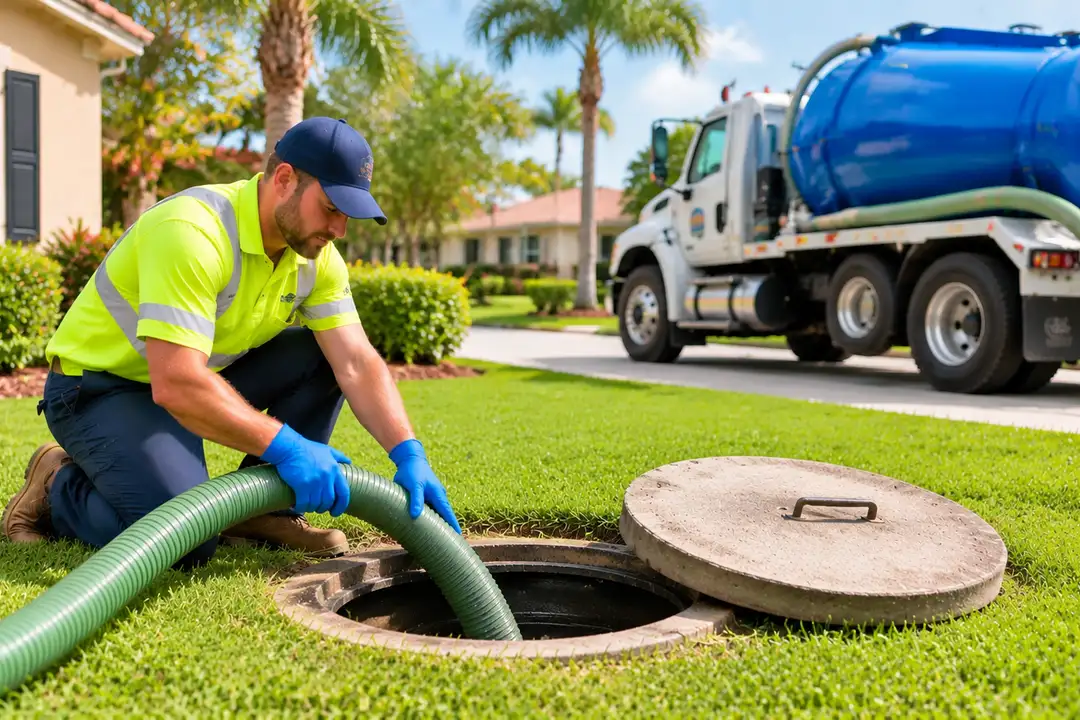
1200 × 800 · job photo in this city
Is Your Clermont Home on City Sewer or Septic?
The City of Clermont runs its own water and sewer utility. Most homes inside city limits are connected to it. The city’s plant also treats wastewater sent over from the Town of Oakland. Outside city limits, in unincorporated south Lake County, septic tanks are still the norm.
Your bill tells you which one you have. A sewer charge means a city connection. No sewer charge usually means a tank in the yard.
If a sewer line reaches your property later, Florida law sets a clock. Owners then have 365 days from the written notice to hook up. A system that needs repair at that time gets 90 days.
For homes that cannot reach sewer, Lake County offers another path.
What Is Lake County’s Septic Removal Program?
The county runs a program that replaces old septic tanks with small treatment units. The unit is about the size of a regular tank and sits underground in your yard. It treats wastewater on site, so your home does not need a sewer pipe. Licensed operators watch each unit from a remote computer.
The county pays to install the unit while funds last. After that, owners pay $56.65 a month for service, operation and upkeep. That charge shows up on the annual property tax assessment. The program says there are no other costs.
Install day is quick. The program says the work usually takes less than 8 hours. Your plumbing is off for less than 2. If your drain field needs work, it gets done the same day. A company called OnSyte Performance runs the program for the county.
Who Is Eligible for the Program?
Your property must be in unincorporated Lake County. It must also sit inside a state cleanup area, known as a BMAP. Homes on Clermont city sewer do not qualify. Before you apply, OnSyte checks whether public sewer is already available to you.
That program is one answer to the county’s water quality rules. Here is the rest.
What Septic Rules Apply in Clermont?
Florida’s septic code is Chapter 62-6, managed by FDEP since 2021. Lake County sits in 3 state cleanup areas: the Upper Ocklawaha River, the Wekiva and Silver Springs. Each one limits how much nitrogen and phosphorus can reach local water. Lake County’s growth plan also requires advanced treatment in its Lake Apopka basin overlay district.
Did Lake County Ban Regular Septic Systems?
No. In June 2025, county staff drafted an ordinance to stop new and replacement conventional systems in unincorporated areas. On July 22, 2025, the county board voted 4 to 1 against it. Staff were asked to bring back a version limited to cleanup areas. We have not seen a final version passed.
So for now, regular systems are still allowed on many lots. Your location and lot size decide what you can build.
Which 2023 State Law Covers New Clermont Systems?
The newest rule is House Bill 1379, which took effect July 1, 2023. It applies to new systems on lots of 1 acre or less inside a state cleanup area. When sewer is not available, those systems must reduce nitrogen. Bigger lots and existing systems that work fine are not affected.
Related: Aerobic systems.
How Do the Chain of Lakes and Hills Affect Septic Systems?
Clermont sits on high, sandy hills between more than a dozen lakes in the Clermont Chain. That mix creates two very different lots. Up on the hills, the sand drains fast and fields usually work well. Down by Lake Minneola and the other lakes, the water table sits close to the surface.
Lakefront lots carry extra limits. State rules keep a drain field at least 75 feet from a lake or other surface water. Fields must also stay 75 feet from a private drinking water well. On a narrow lot, those distances can push the field up the slope or onto raised fill.
After a heavy storm, go easy on water for a few days. Wait to pump until the ground dries, because an empty tank can lift in wet soil. Fields that stay soggy for weeks need a closer look.
Is Fast Draining Sand Always Good for a Septic System?
Not always. Sand on the hills soaks up water quickly, which keeps the yard dry. But very fast soil gives bacteria less time to clean the water before it reaches the aquifer. That is one reason state rules set minimum depths and distances for every field. A soil test shows how your lot drains, so the design fits the ground.
Related: New field installs.
Where Do Clermont Homeowners Get Septic Permits?
Septic permits for the Clermont area come from the Florida Department of Health in Lake County. Its environmental health office is at 320 W Main Street in Tavares. The office phone is 352-253-6130, and the after hours line is 352-729-1754. The office does not post its septic fees online, so call for current amounts.
We file permits for our customers, so the drive to Tavares is our job, not yours.
Related: Inspections.
When Is a Clermont Tank Due for Service?
The first sign is usually slow drains in more than one room. Gurgling toilets, sewage smells and soggy ground over the field follow. On a pump system, a steady alarm means water is backing up.
Book a visit at the first sign. A pump out costs far less than a new field.
How Much Does Septic Service Cost in Clermont?
The type of job sets the price, along with tank size and access. Long rural driveways, gates and buried lids add time. New systems cost more on lake lots that need fill, a pump or a nitrogen reducing design. We give you a written price before the crew starts.
Which Clermont Areas Do We Serve?
We cover the City of Clermont and the unincorporated land around it. That includes homes off SR 50 and US 27 heading south toward Four Corners. We work near the Florida Citrus Tower and Waterfront Park on Lake Minneola. We also serve homes along the Clermont Chain of Lakes.
Our trucks run ZIP codes 34711, 34714 and 34715.
Related: Oakland, Winter Garden, All service areas.
Clermont Septic Questions
Still have a question? Call and talk to a real person.
Call (321) 872-9877 →Can I Still Install a Regular Septic Tank in Clermont?
Often, yes. Lake County’s 2025 proposal to ban conventional systems was voted down. On lots of 1 acre or less in a state cleanup area, though, new systems must reduce nitrogen. Your address and soil test decide which design you need.
What Does Lake County's Septic Removal Program Cost?
The install is free while funds last. Owners then pay $56.65 a month for service. It appears on the yearly property tax assessment, with no other charges.
Why Do Septic Rules Differ Inside and Outside Clermont City Limits?
Inside the city, most homes are on city sewer. Outside the city, homes use septic and follow county and state rules. The county removal program only covers unincorporated land.
Where Do I Get a Septic Permit for a Clermont Home?
From the Florida Department of Health in Lake County, at 320 W Main Street in Tavares. Call 352-253-6130 for forms and fees. We can file the permit for you.
Do Lakefront Homes Face Stricter Septic Rules?
Yes, in practice. Drain fields must sit at least 75 feet from lakes and private wells. Lakefront lots also tend to have a high water table, which often means a raised field.
Book Septic Service in Clermont
Call (321) 872-9877 for septic tank service in Clermont and south Lake County. We handle the permits, explain the county program and give you a written price first.