
Septic Tank Service in St. Cloud, FL
Need septic tank service St Cloud FL homeowners can book fast? We pump, repair and install systems across St. Cloud and the open land east toward Harmony. We know the wet ground along East Lake Toho and the Osceola County permit steps. We can usually be at your door within a day.
What Septic Work Do St. Cloud Homes Need?
Three jobs fill most of our local calendar: regular pumping, drain field repair and brand new systems. Older homes near downtown and the lakefront need upkeep. Newer homes on large lots outside the sewer lines need a full install. You can open each linked page for the full details.
Pumping on a Schedule
Pumping removes the sludge and scum before they reach your field. A 1,000 gallon tank with four people at home needs a pump out about every 3 years. Couples and small households can often wait 4 or 5.
Our crew measures what is in the tank on every visit. That number sets your next date, so you never pump too early or too late. We also rinse the outlet filter if your tank has one.
Related: Full tank cleaning.
Drain Field Repair on Wet Ground
Much of St. Cloud sits on low, flat land near the lake. In the rainy season, the water table climbs toward the surface. A tired field shows it first, with soggy grass, odors or slow drains after a storm. We dig test holes and check the soil before we suggest a fix.
Related: Field repair and replacement.
New Systems for New Homes
Not every new home in the area can reach a sewer line. Large lots and rural parcels often need a full septic system. That starts with a soil test, a site plan and a county permit. On wet lots, the field may sit higher on clean fill. A small pump then lifts water up to it.
Plan ahead on timing. The soil test, design and county review come before any digging. Once the permit is approved, the build itself usually takes only a few days. A final county inspection happens before the trenches are covered.
Related: New system installs, New field installs.
Your street’s utility decides if you need a tank at all.
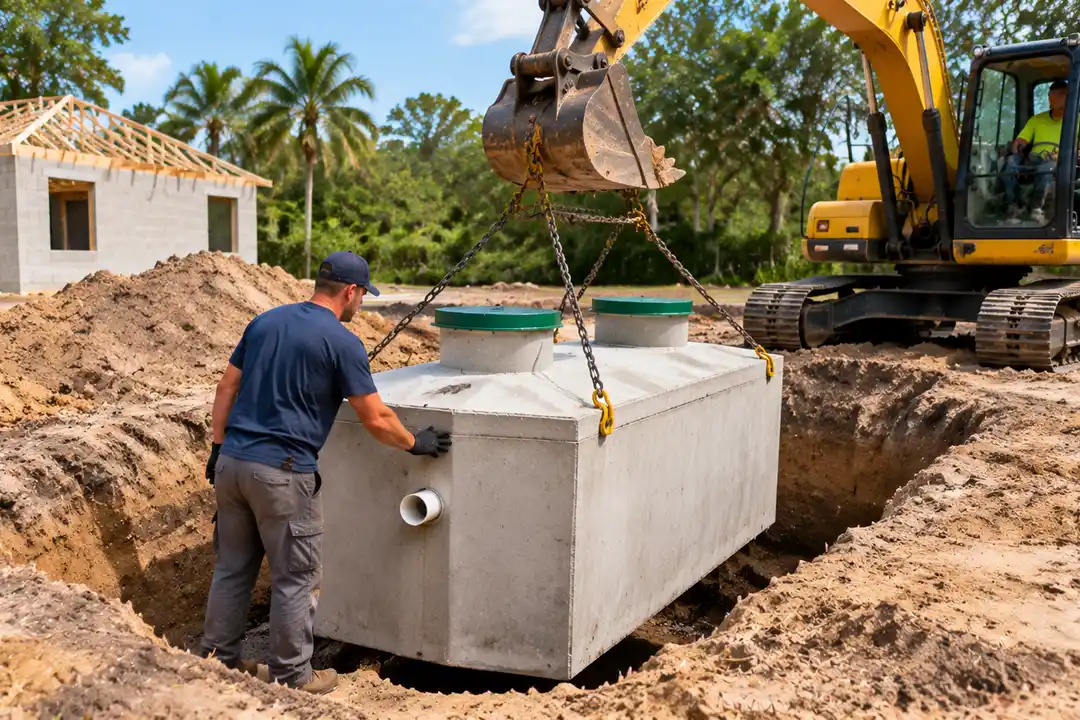
1200 × 800 · job photo in this city
Who Provides Sewer in St. Cloud?
Toho Water Authority. The city handed its water and sewer utility to Toho after a council vote. Toho now serves St. Cloud, Kissimmee, Poinciana and unincorporated parts of Osceola County. Large parts of the city already drain to Toho lines. Older streets and outlying lots still use septic.
Call the utility at 407-944-5000 to check your address. Or look at your water bill. A wastewater charge means you are already on sewer.
What Is the Hopkins Park Septic to Sewer Project?
It is a Toho project in St. Cloud that moves nearby homes from septic tanks to central sewer. The plan also relocates a local lift station. The budget is about $3 million. Work began in August 2025, and Toho expects to finish by April 2027.
Homes in the project area will get mailed details on timing and hookups. Once sewer is ready, Florida law gives owners 365 days to connect after written notice. A system that needs a repair at that point has 90 days.
Homes that stay on septic follow state rules that are getting stricter.
What Rules Apply to New Septic Systems in St. Cloud?
St. Cloud sits in the Lake Okeechobee cleanup area. Water from this part of Osceola County flows south through the Kissimmee chain of lakes toward the big lake. The state tracks how much nitrogen and phosphorus that water carries. St. Cloud is one of the local governments listed in that plan, along with Kissimmee and the county.
Florida’s septic code is Chapter 62-6, run by FDEP since July 2021. The county health office still reviews plans, issues permits and inspects each install.
What Did Florida’s 2023 Septic Law Change for New Homes?
It is House Bill 1379, passed in 2023. For new homes in state cleanup areas, it matters a lot here. Picture a new home on 1 acre or less with no sewer nearby. Its system now has to cut nitrogen. Larger lots can often use a standard design. Working systems already in the ground do not have to change.
Related: Aerobic systems.
Rules decide what you build. The lake decides how well it works.
How Does East Lake Toho Affect Your Drain Field?
St. Cloud lines the south shore of East Lake Tohopekaliga, often called East Lake Toho. Land near the shore is low and flat, and water drains slowly. A drain field only works when there is dry soil below it. When the water table rises in summer, wastewater has nowhere to soak in.
That is why so many fields here sit on raised beds of clean sand. A raised field keeps the trenches above the wet season water line. It often needs a small pump, so keep an eye on the alarm.
After a big storm, use less water for a few days. Spread out laundry and skip long baths. Do not pump the tank while the yard is soaked, since an empty tank can lift in wet ground. If the field stays wet for weeks, call us for a check.
How Do You Find Your St. Cloud Septic Permit?
Go to the Florida Department of Health in Osceola County. Its environmental health office is at 1 Courthouse Square, Suite 1200, in Kissimmee, and its phone is 407-742-8606. Old permits are in the eBridge archive, which you can search by street.
Your permit file often shows the tank size, the field layout and the date it passed inspection. That saves our crew time digging for the lid. Buyers like seeing it too.
What Signs Mean Your Tank Is Full?
Slow drains in several rooms are the most common clue. Toilets that gurgle, sewage smells outside and water pooling over the field come next. In a raised system, a pump alarm that will not stop means water is backing up.
A full tank is cheap to fix with a pump out. A flooded field is not, so call early.
How Much Does Septic Service Cost in St. Cloud?
Cost depends on the job, the tank size and how easy it is to reach. Lids under sod or pavers add digging time. New systems cost more on wet lots that need fill, a pump or a nitrogen reducing unit.
County permits add to the bill. The Osceola list we have puts a new system permit at $400 and a repair permit at $350. A soil and benchmark test runs $115. You get a written price from us before any work starts.
Which St. Cloud Areas Do We Serve?
We cover the whole city and the Osceola County land around it. That includes homes along US 192 and US 441, which run together through town. We work near Lakefront Park and the neighborhoods along the East Lake Toho shore. We also serve Harmony and the rural land to the east.
Our trucks run ZIP codes 34769, 34771, 34772 and 34773.
Related: Kissimmee, All service areas.
St. Cloud Septic Questions
Still have a question? Call and talk to a real person.
Call (321) 872-9877 →Is St. Cloud on Toho Sewer or Septic?
Both. Toho Water Authority provides sewer to many neighborhoods here. Older streets and rural lots still use septic tanks. Call Toho at 407-944-5000 with your address to be sure.
Do New Homes in St. Cloud Need a Nitrogen Reducing System?
Often, yes. St. Cloud is in a state cleanup area. New septic on lots of 1 acre or less needs a nitrogen reducing design when sewer is not available. Larger lots may use a standard system.
How Do I Find My Septic Permit in Osceola County?
Search the eBridge archive from the Osceola County health department by street name. If you cannot find it, call 407-742-8606. Staff can help you request the file.
Why Does My Drain Field Stay Wet Near East Lake Toho?
The water table near the lake rises in the rainy season. When the soil under the field fills with water, wastewater cannot soak in. A raised field or a lighter water load usually helps.
How Often Does a 1,000 Gallon St. Cloud Tank Need Pumping?
About every 3 years for a family of four. Smaller households can go 4 or 5 years. Homes with garbage disposals or frequent guests should stay on the short end.
Book Septic Service in St. Cloud
Call (321) 872-9877 for septic tank service in St. Cloud, FL. We serve the whole city, the lakefront and the rural land east of town.